
Disclosure: Some links on this page are affiliate links. We may earn a commission from qualifying purchases at no extra cost to you. As an Amazon Associate, we earn from qualifying purchases. How affiliate links work.
Silver-spotted Skipper: the fast, silver-marked butterfly of gardens and edges
Skippers are small, fast butterflies that look a bit like moths, and the Silver-spotted Skipper is the easiest one to recognize. It has a bright silver-white patch on the underside of each hindwing, and it zips between flowers with a darting flight. It is common in gardens, fields and woodland edges across the Upstate.
This guide covers identification, the life cycle (including the caterpillar’s leaf shelter), when and where to look, and how to plant for it.
Silver-spotted Skipper at a glance
- Scientific name: Epargyreus clarus
- Size: Wingspan of about 1.75 to 2.6 inches
- When to look: Spring through fall, with two or more broods
- Caterpillar plants: Legumes such as black locust, wisteria and many native peas
- Adult nectar plants: Red clover, milkweed, buttonbush, blazing star, thistle, ironweed, bee balm
- Habitat: Gardens, fields, woodland edges, stream banks
- Overwinters as: A chrysalis
- Ease of attracting: Easy to Moderate
Ease of attracting runs from Easy (nectar flowers are enough) to Moderate (add a common host plant) to Specialist (needs one particular host plant).
How to identify a Silver-spotted Skipper
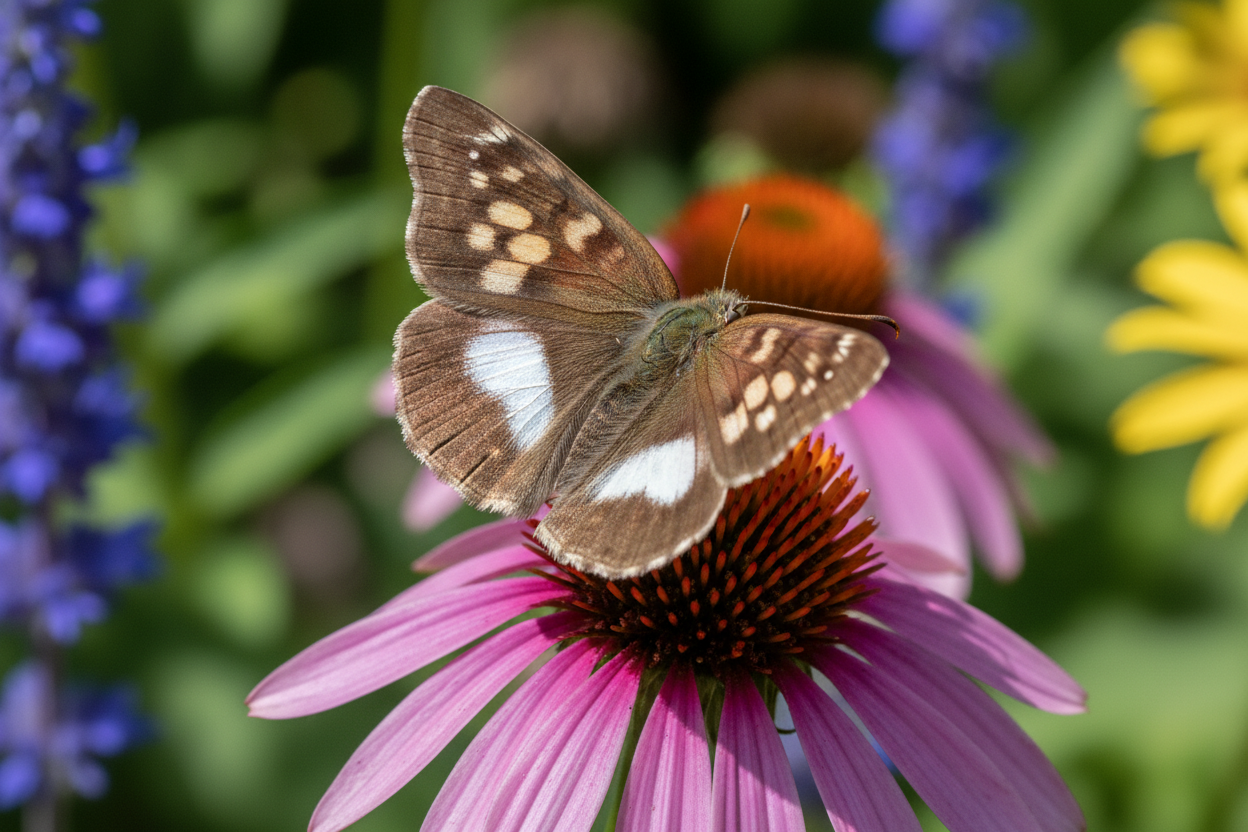
From above, the butterfly is dark brown with a golden-orange patch in the middle of each forewing. The underside is the giveaway: a large, bright silvery-white patch fills the middle of the hindwing. Skippers have a stout, hairy body, wide-set eyes and antennae with a hook at the tip. They often rest with the forewings and hindwings held at different angles.
Lookalikes
No other common skipper has the large silver patch. Other skippers are smaller and tan or orange, and are often hard to separate. If you see a big silver-marked skipper, it is this one. Long-tailed Skipper has long tails and blue-green on the body.
The Silver-spotted Skipper life cycle
- Eggs: Females lay single, round, greenish eggs on host plant leaves.
- Caterpillars: They are yellow-green with dark bands and a large reddish-brown head with two orange spots that look like eyes. Each caterpillar folds a leaf into a shelter with silk and rests inside. It builds a new shelter as it grows.
- Frass shooting: Caterpillars flick their droppings several body lengths away, which helps keep predators from finding the nest.
- Chrysalis: A dark brown pupa, often hidden in leaf litter or a loose shelter. In the fall it overwinters, and adults emerge in spring.
- Adults: Two broods are typical in the East, with more farther south.
Males perch about three to six feet up on a branch or stem, and dart out to chase other insects, then return to the same perch. Adults often rest upside down under leaves during hot afternoons and at night.
When and where to look in the Upstate
Look from spring to early fall in gardens, along field edges and near stream banks. Check flowers in the morning and look at the undersides of leaves for folded shelters. See butterflies in South Carolina by month and the best Blue Ridge butterfly spots.
Plants that bring them in
Host plants
Caterpillars eat many legumes. Black locust is a common wild host, and wisteria is also used, but the Asian wisterias are on South Carolina’s invasive list, so skip them. Good garden choices are native: American wisteria (Wisteria frutescens), wild indigo, tick trefoil and groundnut. Our butterfly garden plant guide explains which plants to avoid.
Nectar plants
Adults favor blue, purple, pink and red flowers, including red clover, milkweed, blazing star, buttonbush, thistle, ironweed and bee balm. They are also known to rob nectar. Blazing star (liatris) is a good choice for a sunny bed.
Bring them to your yard
- Plant native legumes for the caterpillars and sun-loving nectar flowers for the adults.
- Do not tidy every leaf. Chrysalises rest in leaf litter over winter.
- If you see a folded leaf with silk, leave it alone.
- Avoid insecticides, especially on trees and shrubs in spring.
- Offer a shallow damp patch. See how to attract butterflies without plants.
Common questions about Silver-spotted Skippers
Is a skipper a butterfly or a moth?
Skippers are butterflies, though they look like moths. They have club-shaped antennae with a hook at the tip.
Why are there folded leaves on my plants?
Skipper caterpillars fold leaves into shelters. Unless a plant is badly stripped, they do little harm.
Should I plant wisteria for them?
Choose native American wisteria if you want a wisteria. Chinese and Japanese wisterias spread aggressively and are on South Carolina’s invasive plant list.
Why do they hang upside down?
They often rest that way on hot days and at night, tucked under leaves.
Our takeaway
Silver-spotted Skippers are an easy, entertaining butterfly to watch. Plant native legumes and bright nectar flowers, and look for the silver patch.
Official resources and further reading
- Butterflies and Moths of North America for range maps and sighting records
- Clemson Home and Garden Information Center for plant advice that fits South Carolina
- Xerces Society for pollinator conservation guidance
Related guides
- Pearl Crescent ID tips
- How to start a butterfly garden
- Host plants by butterfly
- Free butterfly checklist
Spotted one in the Blue Ridge or Upstate? Send us the date and place through our contact page.
Butterfly timing, numbers and plant hardiness vary with weather, year and elevation. This guide is general information. Check with Clemson Extension or another official source before planting.
Leave a Reply