
Disclosure: Some links on this page are affiliate links. We may earn a commission from qualifying purchases at no extra cost to you. As an Amazon Associate, we earn from qualifying purchases. How affiliate links work.
Pearl Crescent: the small orange butterfly of roadsides and open fields
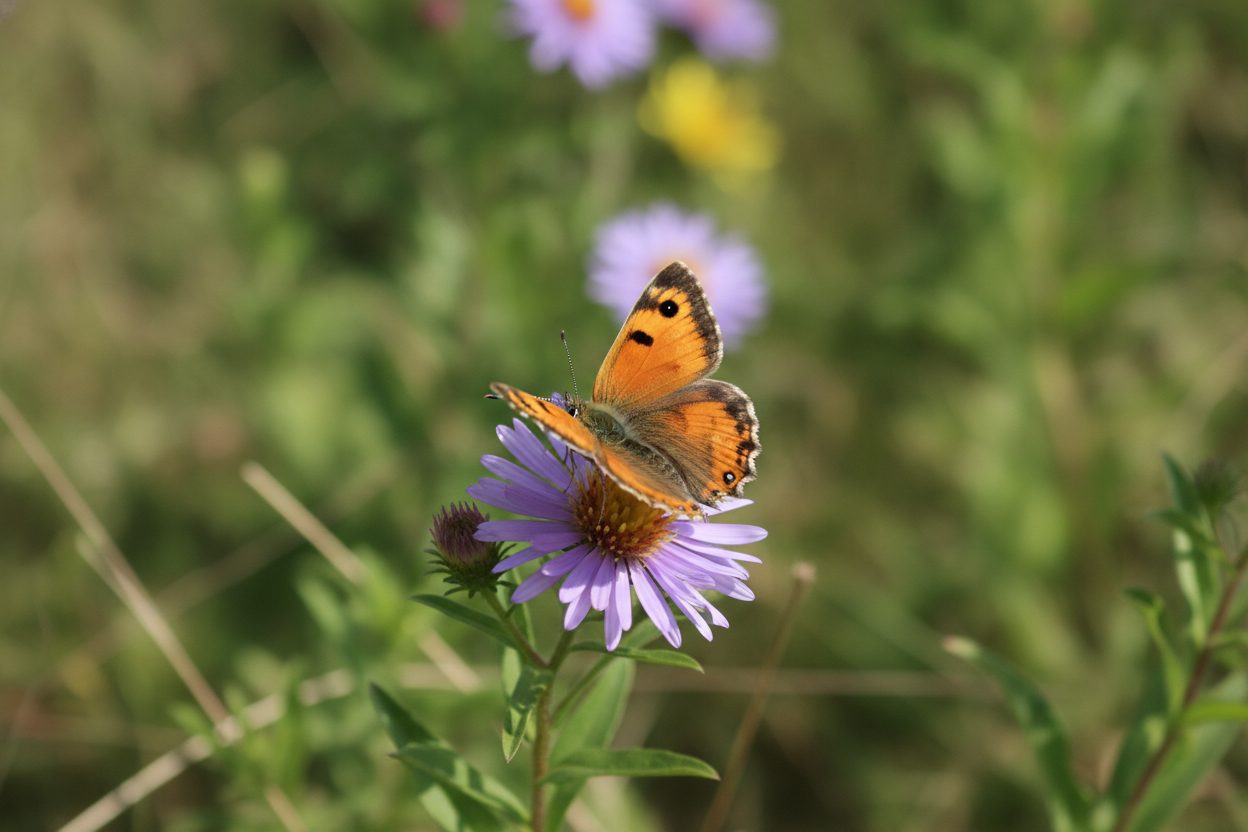
The Pearl Crescent is one of the most common butterflies in the Upstate and one of the easiest to attract. It is small, orange and black, and it is often seen on roadsides, in pastures and in gardens, flitting low over asters and other short flowers. Because it is so common, it is also a good butterfly for beginners to learn.
This guide covers identification, how to separate it from the very similar Northern Crescent, its life cycle, when and where to look, and how to plant for it.
Pearl Crescent at a glance
- Scientific name: Phyciodes tharos
- Size: Wingspan of about 1 to 1.3 inches
- When to look: April through November, with several broods
- Caterpillar plants: Native asters
- Adult nectar plants: Asters, dogbane, swamp milkweed, fleabane, verbena
- Habitat: Open areas, pastures, road edges, meadows, open pine woods
- Overwinters as: A young caterpillar
- Ease of attracting: Easy
Ease of attracting runs from Easy (nectar flowers are enough) to Moderate (add a common host plant) to Specialist (needs one particular host plant).
How to identify a Pearl Crescent
The upper side is bright orange with black borders and a scatter of black markings. The key mark is on the underside of the hindwing: a pale, pearly crescent set in a dark patch along the edge. Males usually have black knobs at the tips of the antennae.
Lookalikes
- Northern Crescent: Very similar. It has orange antenna tips and is more of a northern and mountain species. Many people cannot tell them apart without close examination, so a record of “crescent” is fine.
- Silvery Checkerspot: Larger, with a silvery underside.
- Fritillaries: Larger, with silver spots. See the Great Spangled Fritillary guide.
The Pearl Crescent life cycle
- Eggs: Females lay small batches of pale green eggs on the underside of aster leaves.
- Caterpillars: Young caterpillars feed together. Older ones are dark with pale stripes and spines. They are small and easy to miss.
- Winter: Young caterpillars overwinter, sheltered in leaf litter near the host plants, and resume feeding in spring.
- Chrysalis: It hangs from a stem or leaf, is brown and mottled, and lasts about a week or two in warm weather.
- Adults: Several broods fly through the season. In the far South they can be seen nearly year-round.
Males patrol low over open ground looking for females and perch on the ground or low plants. They often fly in short bursts, a flutter and then a glide.
When and where to look in the Upstate
Look from early spring through late fall in sunny, open places: road edges, fields, meadows, power line cuts and gardens with asters. Fall is a good time to look for them on asters, which bloom late. See butterflies in South Carolina by month and the best Blue Ridge butterfly spots.
Plants that bring them in
Asters for the caterpillars
Native asters are the host plants and also a major fall nectar source. They grow best in full sun and average soil. Many are tough, spread easily and need little care. Look for native aster plants, and check labels for the species and for any pesticide treatment.
Nectar plants
Adults take nectar from many low flowers, including asters, fleabane, dogbane, swamp milkweed and verbena. See the butterfly garden plant guide.
Bring them to your yard
- Plant native asters in a sunny spot and let them spread.
- Do not cut the plants to the ground in fall. Leave stems and leaf litter for the young caterpillars.
- Keep some bare soil or a damp patch for males to perch on.
- Avoid insecticides and herbicides on and near the beds.
- Mow later and less often along sunny edges.
Common questions about Pearl Crescents
Is the Pearl Crescent rare?
No, it is one of the most common butterflies in the Upstate and is found in most open habitats.
How can I tell a Pearl Crescent from a Northern Crescent?
Check the antenna tips: orange suggests Northern, and black suggests Pearl. The two are very close, and many observers just record “crescent.”
Should I cut back my asters in fall?
Wait until spring if you can. Young caterpillars spend the winter near the base of the plants.
Do they visit gardens in town?
Yes. Any sunny garden with asters and other low flowers can attract them.
Our takeaway
Plant native asters, leave the stems standing through winter, and you will likely have Pearl Crescents for years. It is one of the easiest wins in a butterfly garden.
Official resources and further reading
- Butterflies and Moths of North America for range maps and sighting records
- Clemson Home and Garden Information Center for plant advice that fits South Carolina
- Xerces Society for pollinator conservation guidance
Related guides
- Great Spangled Fritillary overview
- How to start a butterfly garden
- Host plants by butterfly
- Free butterfly checklist
Spotted one in the Blue Ridge or Upstate? Send us the date and place through our contact page.
Butterfly timing, numbers and plant hardiness vary with weather, year and elevation. This guide is general information. Check with Clemson Extension or another official source before planting.
Leave a Reply